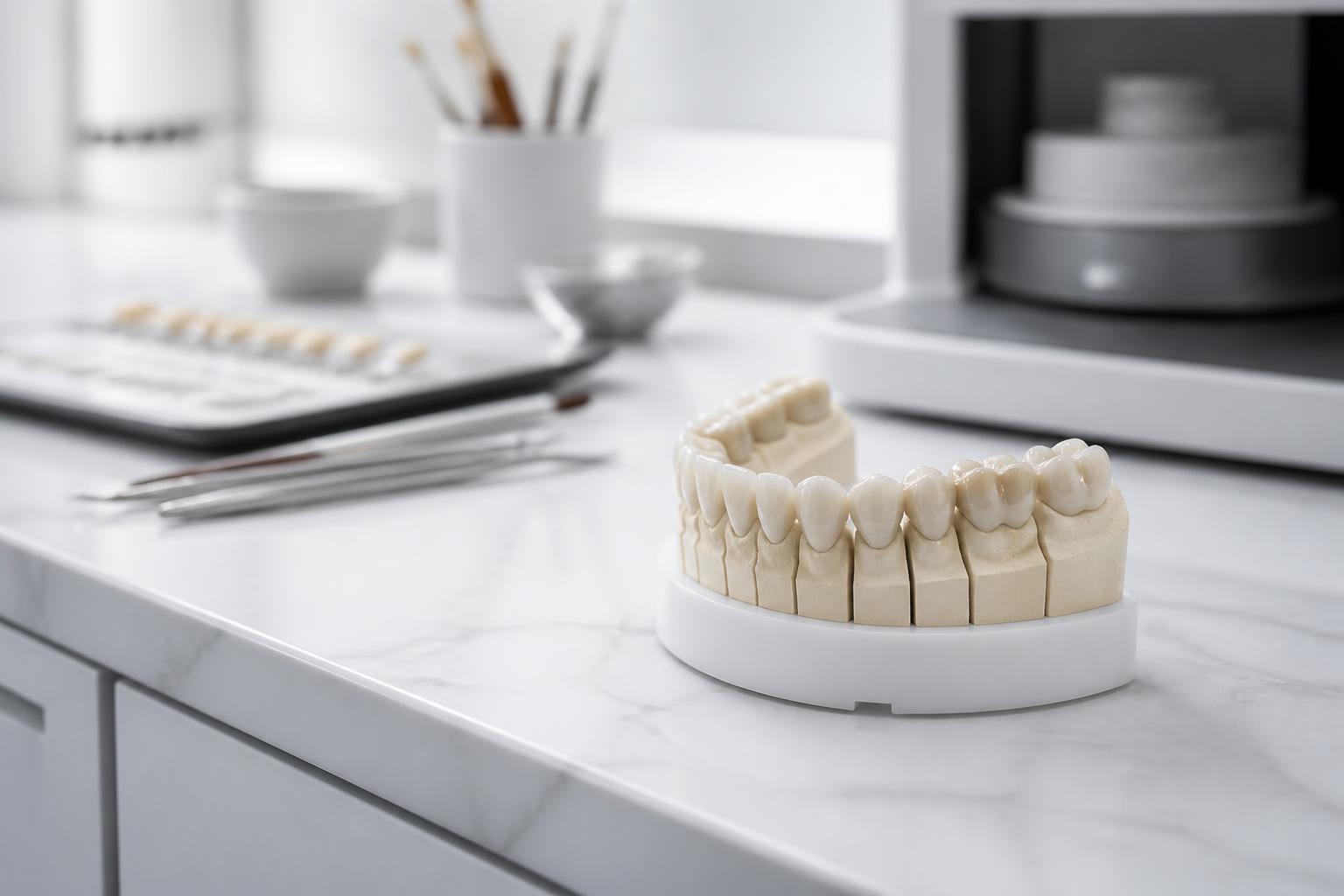
A cracked tooth, a worn-down filling, or a missing tooth can change how you eat, speak, and smile. If biting feels uneven or a gap is making nearby teeth shift, a crown or bridge may be the next practical step.
At Dr. Courtney & Dr. Anton Misleh DDS, we help patients in San Diego, CA choose restorations that fit their bite, support day-to-day comfort, and blend with the rest of the smile. Whether you need to protect a tooth after treatment or replace one that is no longer there, we can walk you through the options and plan care that makes sense for your situation.
A dental crown is used when a tooth needs more support than a filling can provide. It covers the visible part of the tooth and helps hold the structure together after decay, fracture, wear, or a large restoration has weakened it.
People often come to us after noticing one of these changes:
A crown can help preserve a tooth that still has healthy root support. It is often chosen when the goal is to protect what remains instead of removing the tooth.
A bridge is used to replace one or more missing teeth. It spans the space by anchoring to teeth on either side, helping restore chewing ability and keeping nearby teeth from drifting into the opening.
Missing teeth can create a chain reaction. Food may trap differently, your bite can feel off, and the teeth next to the gap may begin to lean. A bridge can help close that space and give the smile a more complete look.
Bridges are often a good fit when the teeth next to the gap are strong enough to support the restoration and the surrounding bite can handle the added structure. During your visit, we look at the condition of the support teeth, the size of the space, and your overall oral health before recommending a design.
Crowns and bridges are not one-size-fits-all. The material, shape, and design depend on where the tooth is located and what it needs to handle each day. In some cases, a crown is used to restore a single tooth. In others, a bridge is used to replace a missing tooth with support from neighboring teeth.
Dr. Courtney & Dr. Anton Misleh DDS also provides implant-focused care, which can be important when a missing tooth is being restored with a more independent support system. We can explain which direction fits your situation and what each choice means for daily use.
Restoring a tooth or replacing a missing one usually starts with an exam and radiographs. These help us see the tooth structure, the surrounding bone, and how the teeth fit together. From there, we plan the restoration with your bite, comfort, and appearance in mind.
At Dr. Courtney & Dr. Anton Misleh DDS, the goal is not just to replace what is missing. It is to make the restored tooth feel natural when you chew, speak, and smile.
Crowns can solve several common problems that affect comfort and confidence. If a tooth has become fragile or looks noticeably different from the others, a crown can help unify strength and appearance.
Some crowns are selected mainly for durability, while others are chosen to improve the look of front teeth. The right option depends on where the tooth sits and how much pressure it takes during chewing.
Bridges address the space left by a missing tooth or several missing teeth. That gap can make it harder to chew certain foods, and it may affect how the surrounding teeth line up over time.
A bridge helps spread chewing forces across neighboring teeth instead of leaving all the pressure on the area around the gap. It also helps maintain spacing, which can make brushing and flossing simpler than trying to work around a shifting opening.
For some patients, a bridge is a reliable solution when they want to replace a tooth without leaving a visible space. For others, implant restorations may be discussed as part of the plan. We review both the oral condition and your long-term goals before moving forward.
The final look of a crown or bridge matters, especially for teeth that show when you smile. The restoration should match the nearby teeth as closely as possible while still standing up to daily use.
During planning, we consider:
Cosmetic dentistry and restorative dentistry often overlap here. A crown or bridge can repair function and also improve the look of the smile when it is shaped and shaded carefully.
Once a crown or bridge is placed, daily habits matter. Good home care helps the restoration last longer and protects the teeth and gums around it.
Helpful habits include:
We also provide home care guidance so you know how to keep the area clean without damaging the restoration. That matters because crowns and bridges still depend on the health of the surrounding teeth and gums.
A crown is used to restore a tooth that is still there but needs protection or rebuilding. A bridge is used when a tooth is missing and the open space needs to be filled. An exam and radiographs help us determine which one fits your case.
Yes. A crown is often used after root canal therapy because the tooth may be more fragile and benefit from full coverage. It helps protect the treated tooth from further fracture.
It may take a short adjustment period. The goal is for the bridge to blend with your bite so eating and speaking feel natural again. We check fit carefully before placement.
Yes. They can restore shape, close gaps, and create a more even appearance. Many patients want both better function and a cleaner look, and these restorations can help with both.
Longevity depends on the health of the support teeth, home care, and routine visits. Keeping the area clean and watching for changes in fit can help the restoration serve you well.
We can review crowns, bridges, and implant restorations and explain how each one works with your mouth. The right choice depends on the number of missing teeth, surrounding tooth strength, and the look you want to achieve.
If you have a damaged tooth, a worn restoration, or a missing tooth that is affecting your bite, a crown or bridge may be the right next step. Dr. Courtney & Dr. Anton Misleh DDS welcomes patients at 4320 Genesee Ave UNIT 204, San Diego, CA 92117.
Our office is open Monday through Thursday from 8:00 am to 5:00 pm. You can call +18582681618 to ask about exams, restorative care, new patient forms, or the next available opening for your visit.